6 Leadership Books for Leading From a Healthier Inner Life
Six books about restoration, emotional health, spiritual formation, change, and learning to lead from a truer place.
Behind many successful leaders, there is often another story.
It is not the one that appears on a CV, a website biography, or a LinkedIn profile. It is the quieter story underneath.
The story of carrying disappointment. Of navigating relentless pressure. Of trying to lead well while relationships feel strained. Of slowly realising that life is no longer quite at ease with itself.
Many leadership books focus on what sits above the surface: how to cast vision, build strategy, grow an organisation, manage change, or lead people more effectively.
Those things matter.
But they are not always what sustains a leader when the tank is running low.
True leadership, the kind that lasts and brings life to others, has to flow from the inside out.
If you are tired of the hustle, or if you are looking for leadership books that go deeper than technique, these six titles offer a different kind of invitation.
They are not only books about leadership strategy.
They are books about restoration, emotional health, spiritual formation, change, and learning to lead from a truer place.
For Christian leaders, church leaders, charity leaders, founders, senior executives, and anyone carrying responsibility, these books can help you pay attention to what is happening beneath the surface.
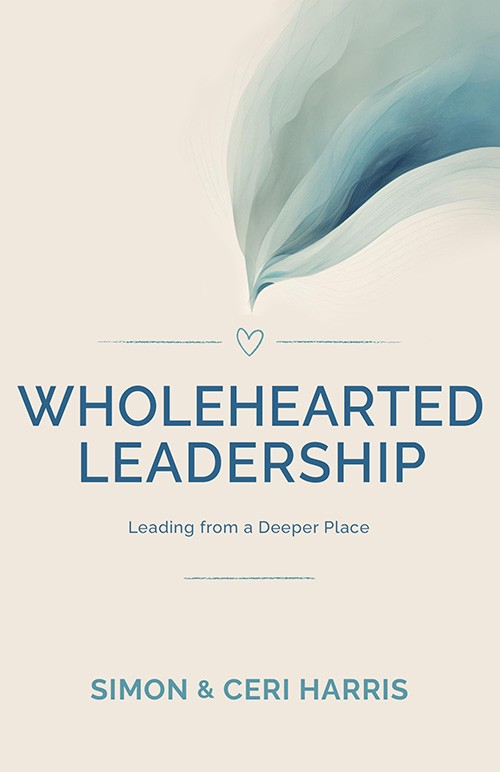
1. Wholehearted Leadership by Simon and Ceri Harris
In a leadership culture that often rewards performance, pace, and outward strength, Wholehearted Leadership begins somewhere deeper.
Simon and Ceri Harris write from over 30 years of walking alongside leaders across the church, charity sector, and business world. Again and again, they noticed something familiar.
Gifted, capable leaders were stepping into responsibility with passion and vision, but over time many found themselves worn down by the hidden cost of leadership.
The issue was not always a lack of skill.
Often, it was something beneath the surface.
- Unresolved pain.
- Hidden shame.
- Old patterns.
- A divided inner life.
- A heart that had learned to protect itself in order to survive.
This is where the language of “fig leaves” becomes so helpful. Leaders often learn to cover vulnerability with competence. They keep functioning. They keep delivering. They keep appearing strong.
But beneath the surface, something needs attention.
Wholehearted Leadership is written into that gap.
It invites leaders to see that true leadership is an inside job. Sustainable external impact cannot be separated from the health of the internal life.
The book gently helps readers notice the signs of a “heart attack” in their leadership: the places where striving, fear, shame, or self-protection are quietly shaping the way they lead.
But it does not leave the reader in diagnosis.
It offers a way through.
There is honesty, but also hope. There is psychological insight, but also spiritual depth. There is language for vulnerability, but also a path towards wholehearted living.
For leaders who know they are still functioning but are not truly flourishing, this book offers a grounded and grace-filled invitation: to stop merely managing pressure, to begin healing the foundations, and to learn to lead from a more integrated, wholehearted place.
2. Leading on Empty by Wayne Cordeiro
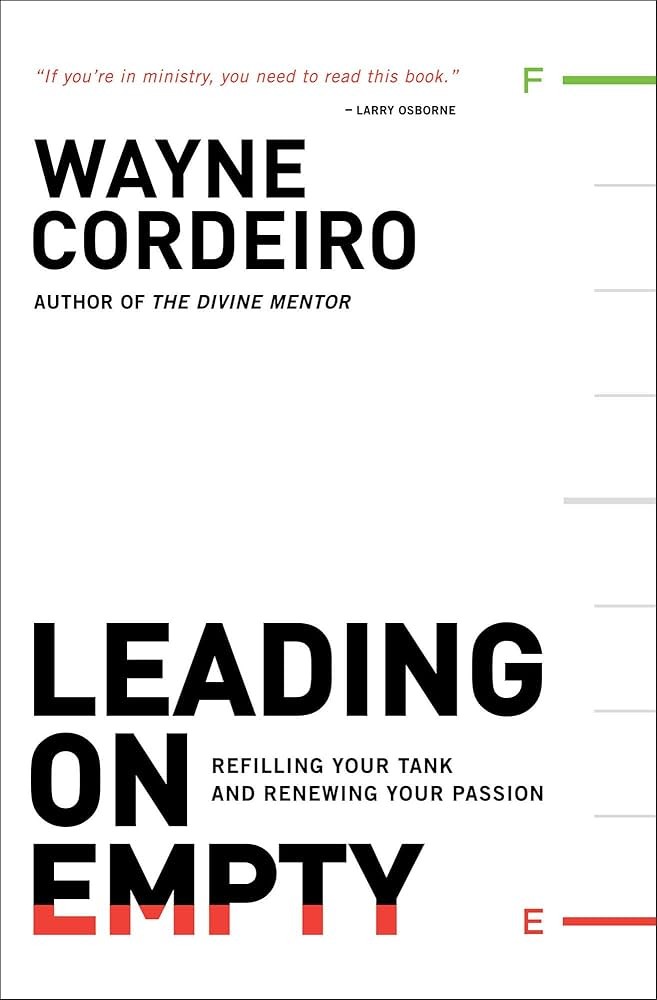
There is a difference between physical tiredness and soul exhaustion.
Wayne Cordeiro learned that difference the hard way.
At the height of his leadership success, he hit a wall of severe burnout. Leading on Empty is his honest account of that season and the life-saving lessons he learned about replenishment, limits, and the hidden cost of constantly pouring out.
This book matters because many high-capacity leaders believe they can simply keep going.
If they work harder, the exhaustion will pass. If they get through the next season, things will settle. If they just push a little longer, they will be fine.
But running on empty does not only affect productivity.
It affects joy. It affects relationships. It affects the soul.
Cordeiro gives leaders language for recognising the early warning signs of depression, burnout, and emotional exhaustion before they become impossible to ignore.
He also helps leaders ask a crucial question:
What can I do, and what must I do?
That distinction is deeply practical.
For leaders carrying too much, this book offers a way to audit energy, protect replenishment, set necessary boundaries, and recover a healthier rhythm of life and leadership.
It is especially helpful for leaders who have spent years giving out, but have not yet learned how to receive, rest, and be restored.
3. Metanoia by Alan Hirsch
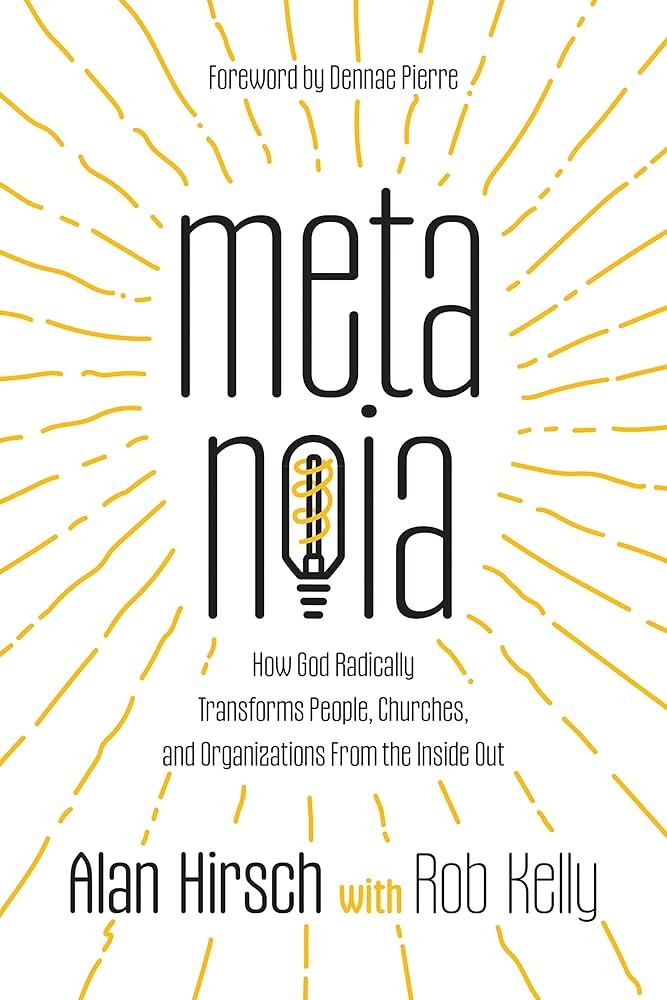
Leadership often involves change.
But Alan Hirsch reminds us that true change does not begin with a new model, a new programme, or a new organisational structure.
It begins with a change of mind.
Metanoia is a Greek word often translated as repentance, but its meaning is richer than simply feeling sorry or changing behaviour. It speaks of a deep, radical shift in how we see.
That is why this book is so important for leaders.
Many organisations try to innovate by changing what is visible. They adopt new language, launch new initiatives, or rearrange the external structure.
But if the underlying mindset remains the same, the change rarely lasts.
The old way of seeing continues to shape the new activity.
Hirsch helps leaders recognise that transformation has to go deeper than the surface. If we want to lead genuine change, we have to pay attention to the paradigms, assumptions, and inherited ways of thinking that shape how we interpret the world.
This is a necessary disruption for leaders who are trying to shift a culture.
It asks:
- What if the problem is not only what we are doing?
- What if the problem is how we are seeing?
For leaders, churches, organisations, and communities navigating change, Metanoia helps open up new imagination.
It invites leaders to see old problems with new eyes, and to become more than managers of the status quo.
It helps them become catalysts for deeper transformation.
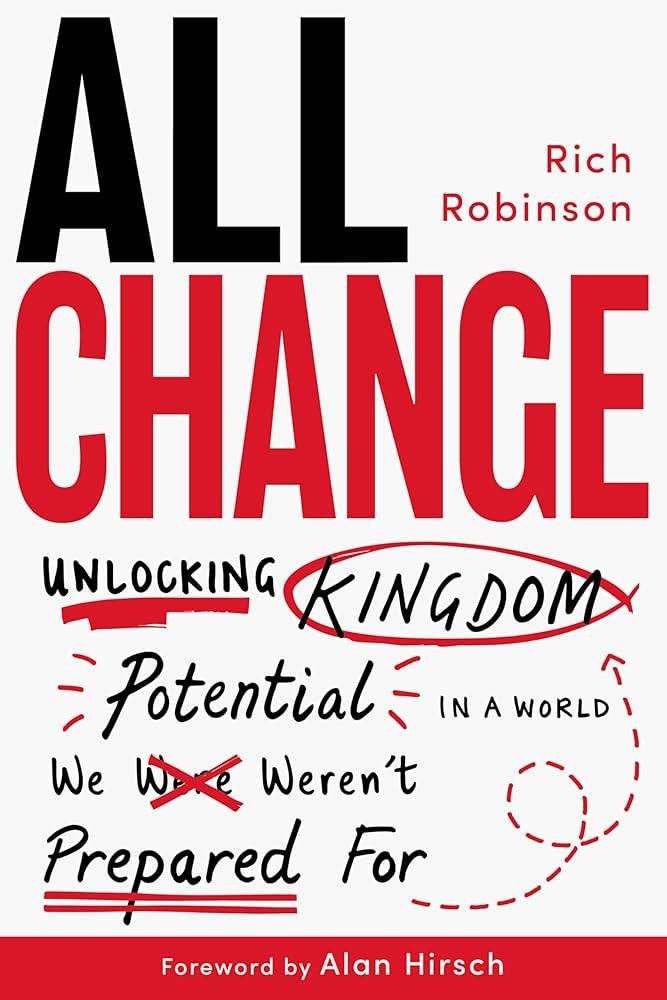
4. All Change by Rich Robinson
Leading people through change is one of the most demanding tasks a leader can carry.
It is not only strategic work.
It is emotional work. Relational work. Cultural work. Spiritual work.
In All Change: Unlocking Kingdom Potential in a World We Weren’t Prepared For, Rich Robinson offers a practical and accessible way of understanding how change actually happens.
Many leaders know something needs to shift, but they become stuck.
Sometimes because of uncertainty. Sometimes because of fear. Sometimes because they are relying on old playbooks in a world that has already changed.
Robinson names this reality well.
Some challenges are not technical problems with quick fixes. They are adaptive challenges. They require new learning, new imagination, and a willingness to move through uncertainty with others.
This is where the book becomes especially useful.
Rather than treating change as something leaders force upon people, All Change helps leaders understand how to bring people on a shared journey.
Its Dream, Discover, Design, and Deploy framework gives language to the movement of change, but it also honours the human reality of transition.
Because people are not machines.
They carry memories, fears, hopes, loyalties, and resistance. Good change leadership pays attention to all of that.
For leaders trying to shift a team, church, charity, or organisation, this book helps move change from a top-down announcement to a shared process of discernment, movement, and mobilisation.
It is particularly helpful for leaders who do not simply want to drag people into the future, but want to help them participate in it.
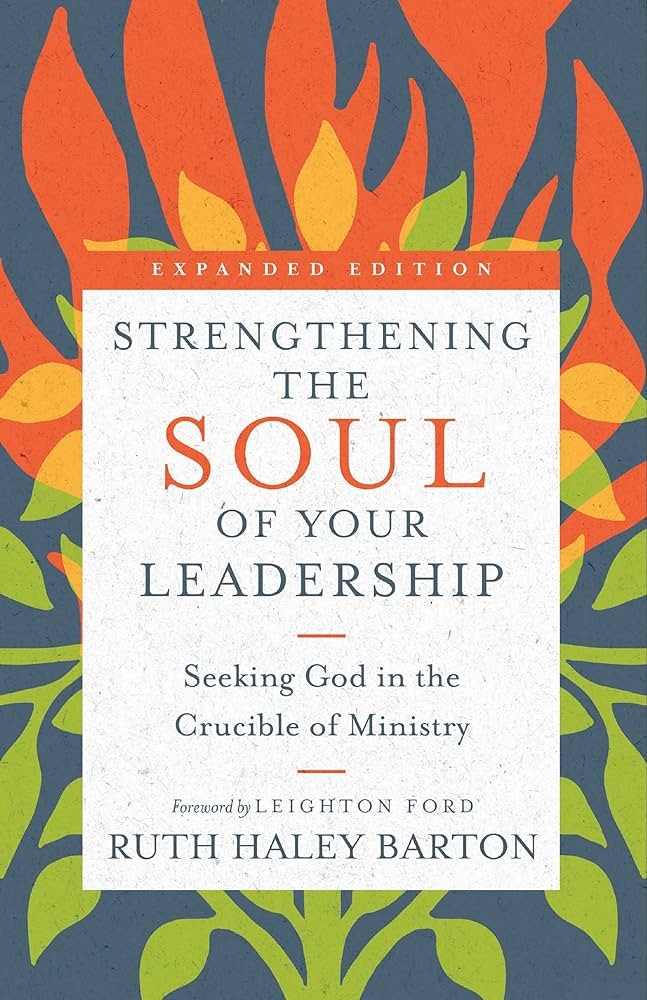
5. Strengthening the Soul of Your Leadership by Ruth Haley Barton
If leadership is about giving to others, what happens when the leader has nothing left to give?
That is the question sitting underneath Ruth Haley Barton’s Strengthening the Soul of Your Leadership.
Using the life of Moses as a guide, Barton explores the hidden life of the leader: the places of formation, solitude, calling, limits, discernment, and surrender.
This book speaks directly to leaders whose public responsibility has outpaced their private health.
- It is possible to keep leading while becoming spiritually dry.
- It is possible to remain productive while becoming deeply reactive.
- It is possible to serve others while slowly losing touch with your own soul.
Barton helps leaders slow down enough to notice what is happening within them.
She bridges spiritual formation and leadership practice in a way that feels deeply needed in a world obsessed with speed, output, and visible success.
The book is not simply about doing more spiritual practices.
It is about becoming the kind of leader whose life with God can actually sustain the work they are called to carry.
For leaders who feel hurried, fragmented, or spiritually tired, this book offers a gentle but searching invitation back to the hidden place.
It helps leaders recover silence, solitude, discernment, rest, and a deeper grounding in God.
And it reminds us that the truest source of leadership is not charisma, strategy, or control.
It is the life being formed in secret.
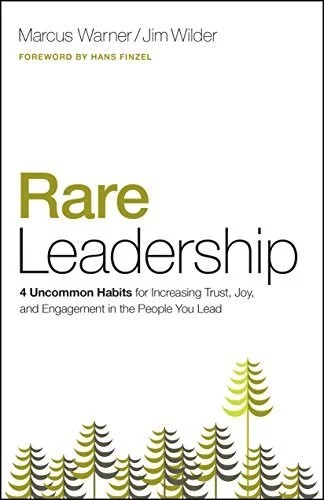
6. Rare Leadership by Marcus Warner and Jim Wilder
Most leadership training focuses on the slow track: logic, strategy, systems, and decision-making.
Those things matter.
But in moments of pressure, leaders often do not react from their strategy documents. They react from their emotional and relational maturity.
That is where Rare Leadership is so helpful.
Marcus Warner and Jim Wilder bring together brain science, emotional intelligence, and practical leadership wisdom to explore the fast track of the brain: the emotional and relational centre that shapes how we respond in real time.
This matters because many leadership failures are not caused by a lack of intelligence.
They are caused by a loss of relational presence under stress.
A leader becomes reactive. A team becomes fearful. A culture becomes defensive. Joy disappears from the room.
Rare Leadership gives leaders a practical vocabulary for becoming more emotionally mature and relationally present, especially when pressure rises.
Its four habits are simple, but deeply challenging:
- Remain relational.
- Act like yourself.
- Return to joy.
- Endure hardship well.
For leaders who want to build healthier team cultures, this book is very practical. It helps leaders understand how to stay connected during conflict, regulate their emotional responses, and create environments shaped by joy rather than fear.
It is especially useful for those who know that leadership is not only about getting things done.
It is about the atmosphere we create while doing them.
Ready to Lead from a Deeper Place?
If you resonate with the themes in these books, leadership doesn't have to be a lonely, exhausting endeavour where you are forced to choose between success and your own wellbeing.
Start your journey by grabbing a copy of Wholehearted Leadership, and explore how Simon and Ceri Harris can support you, your team, or your organisation through coaching, retreats, and transformational resources.